
The Power of Career and Technical Education: Bridging the Gap Between High School, College, and Careers
In the modern economic landscape, the traditional “college-for-all” narrative is evolving into a more nuanced “skills-for-all” approach. Career and Technical Education (CTE) programs are at the forefront of this transformation, helping high school students build real-world skills and prepare for success after graduation. No longer confined to the “vocational school” stereotypes of the past, today’s CTE programs are high-tech, rigorous, and deeply integrated with industry needs. Instead of just learning from textbooks, CTE students get hands-on experience in fields like health care, construction, information technology, digital media, and culinary arts. These programs connect classroom theory to professional practice—giving students a significant head start on both college and the workforce.
The Gold Standard: Industry-Recognized Certifications
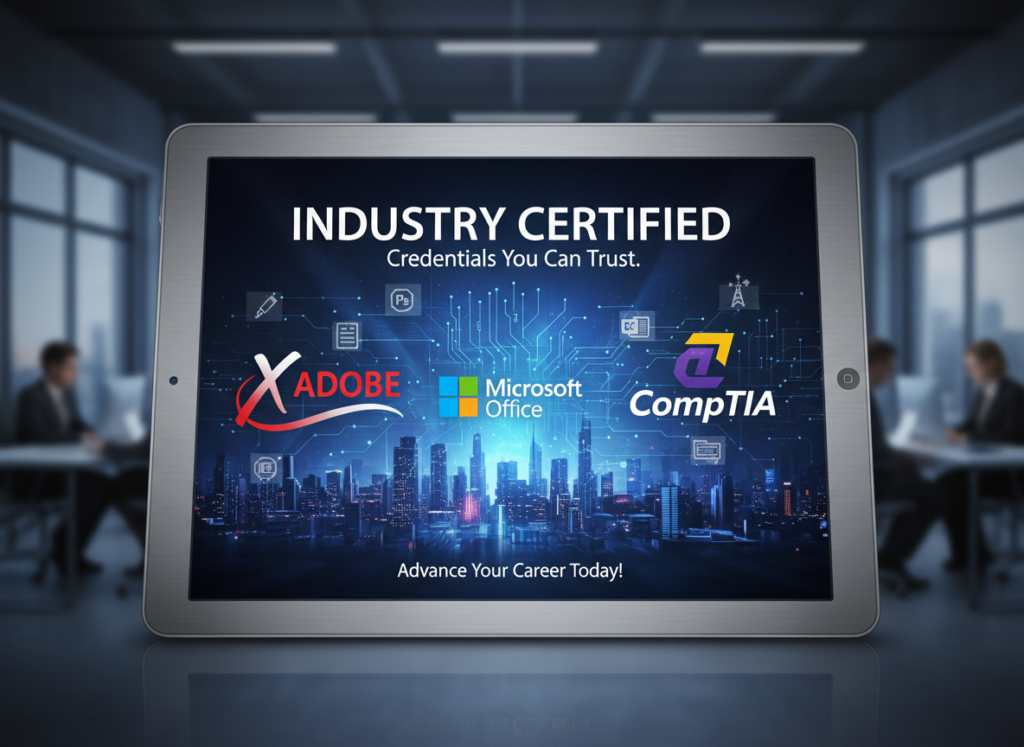
One of the most significant advantages of CTE is the ability for students to earn industry certifications before they even receive their high school diploma. These credentials serve as a “universal language” for employers, proving that a candidate possesses specific, measurable skills.
Information Technology and Cybersecurity
In the digital age, IT certifications are among the most valuable assets a student can possess.
- CompTIA A+: This is the industry standard for establishing a career in IT. Students learn hardware, software, and troubleshooting.
- Cisco Certified Support Technician (CCST): An entry-level credential that validates foundational networking knowledge.
- AWS Certified Cloud Practitioner: As businesses move to the cloud, this certification introduces students to the high-demand world of Amazon Web Services.
Healthcare and Business
Health science programs utilize AES (Applied Educational Systems) to prepare students for various clinical and administrative roles.
- Certified Nursing Assistant (CNA): Many CTE programs allow students to sit for state CNA exams, providing an immediate pathway to patient care.
- Microsoft Office Specialist (MOS): Validates skills in Excel, Word, and PowerPoint—essential for any modern office environment.
- QuickBooks Certified User: A vital credential for students interested in accounting and small business management.
Skilled Trades and Safety
- NCCER (National Center for Construction Education and Research): Provides standardized training and credentials for construction professionals.
- HBI (Home Builders Institute): Offers certifications in carpentry, electrical, and plumbing.
- OSHA 10-Hour Construction Safety: A critical safety credential that many construction firms require before a worker can even set foot on a job site.
Creative and Culinary Arts
- Adobe Certified Professional: For students in digital media, proving mastery in Photoshop, Illustrator, or Premiere Pro is the key to freelance and agency work.
- ServSafe Food Protection Manager: This is the highest level of food safety certification and is often required by law for kitchen managers.
From Classroom to Career: The Entry-Level Advantage
Employers love seeing these certifications because they mean students are job-ready from day one. In an era where companies are struggling to find skilled labor, a high school graduate with a CompTIA A+ certification or an NCCER credential is a highly attractive candidate.
For example, a student graduating with a CompTIA A+ certification can apply for entry-level IT Help Desk roles that typically pay between $40,000 and $55,000 annually—wages far above the average for high school graduates. Similarly, students with Adobe certifications often find work as junior graphic designers or social media coordinators for local businesses.
In the trades, the impact is even more immediate. News reports, such as those featured on The Hechinger Report, highlight how students in welding and HVAC programs are being recruited by local firms months before graduation. Many of these students enter apprenticeships where they “earn while they learn,” receiving a paycheck and professional training simultaneously.
The Financial Edge: College Credits and Articulation
CTE programs are not just for students heading straight into the workforce; they are a powerful tool for those pursuing higher education. Through Articulation Agreements, high schools and colleges agree to recognize CTE coursework as college-level material.
Pennsylvania’s SOAR Program
A prime example of this is Pennsylvania’s SOAR (Students Occupationally and Academically Ready) program. SOAR allows students to earn college credits for their CTE program of study if they meet specific requirements, such as:
- Completing the high school CTE program with a minimum GPA.
- Achieving “Advanced” or “Competent” on the NOCTI (National Occupational Competency Testing Institute) exam.
- Graduating from high school.
This can result in 9 to 15 college credits being applied toward an Associate or Bachelor’s degree at participating institutions like Pennsylvania College of Technology or local community colleges. At an average cost of $500 to $1,000 per credit hour at many institutions, this represents a savings of $4,500 to $15,000 for the student’s family.
Dual Enrollment and “College in the High School”
Many CTE programs also partner with local colleges to offer dual enrollment. For instance, a student in a Health Science program might take a “Medical Terminology” course that counts for both high school graduation and a local community college’s nursing program requirements. This “fast-tracks” the student, allowing them to graduate from college sooner and enter the high-paying professional workforce faster.
Success Stories: Real-World Impact
The success of CTE is best seen through the lens of individual achievement. Across the country, news outlets are documenting the “CTE Renaissance.”
- The “Million Dollar” Skills: A recent NPR report detailed the surge in trade school enrollment as students realize they can earn six-figure salaries in specialized fields like underwater welding or powerline technology without the burden of massive student debt.
- Tech Partnerships: In cities like New York and Chicago, P-TECH (Pathways in Technology Early College High School) schools allow students to earn both a high school diploma and an Associate degree in a STEM field in six years, with a “first-in-line” guarantee for jobs at companies like IBM.
- Culinary Rising Stars: Students with ServSafe certification often start working in professional kitchens during high school. By the time they reach college-age, they often have two to three years of experience, allowing them to move into sous-chef or management roles much earlier than their peers.
A Solid Path Toward the Future
The modern CTE program is a “win-win-win” for students, families, and the economy.
- For Students: It provides relevance to their education, a sense of purpose, and tangible proof of their abilities through certifications.
- For Families: It offers a massive financial advantage by reducing the time and cost of college through programs like SOAR.
- For the Economy: It builds a pipeline of skilled workers ready to tackle the challenges of infrastructure, healthcare, and technology.
Whether a student’s goal is to become a surgeon, a cybersecurity analyst, a master carpenter, or a digital marketer, CTE provides the foundation. By blending academic rigor with technical expertise, these programs ensure that “graduation” isn’t just an end—it’s a launchpad. These stories of success show how CTE gives students more than just an education—it gives them opportunity, confidence, and a clear, debt-conscious path toward a flourishing future.
Quick Resource Links for Further Exploration:
- Certifications: CompTIA, Adobe Certified Professional, NCCER
- National News: Education Week: Career and Technical Education News
- Pennsylvania Specific: PA Department of Education SOAR Program
- Testing: NOCTI Credentialing Solutions

Pingback: Occupational Advisory Committees (OACs) - Life blood of a CTE program - Philly CTE