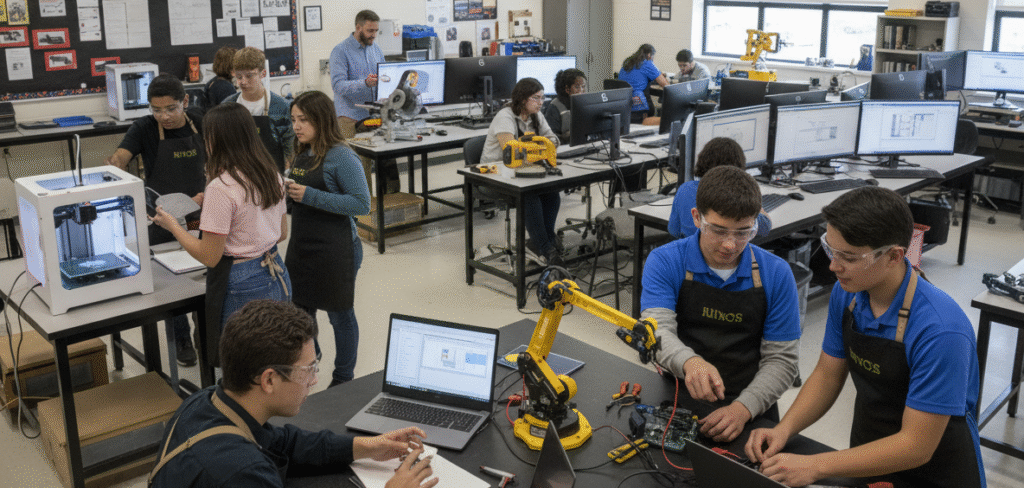

A CTE program is course of study that prepares students for high-priority, aligned industry occupations. For example, a plumbing program will focus it’s curriculum, activities, assignments, and assessments on knowledge and skills an entry-level plumber should posses. The skills learned may also enable students who exit the program to be prepared for adjacent occupations, like HVAC, construction, and gas fitting. In addition, students are provided opportunities to earn industry certifications, post-secondary credits, and internship experiences. To ensure that the instructor can teach all of the knowledge and skills related to the industry occupation, the instructor must prove adequate industry experience and pass an industry-based exam.
Pennsylvania has over 80 career and technical centers (CTCs ~ Technical Schools) that offer a wide array of programming for all students. Each county has an intermediate unit with several CTC(s) residing in that county. Some counties may have several CTC(s) while some may only have one CTC. You can view this map to see where your CTC(s) are located. Participating school districts work, in conjunction, with the CTC to send their students to the CTC for specific CTE programs.
The programs in the CTC(s) offer multiple programs that are aligned with high-priority occupations in the region and the state. There are two different types of programs that CTC(s) offer:
- Program of Study
- Career and Technical Education program
A program of study – student occupationally and academically ready (SOAR) is program that is aligned to one or more high priority occupations with a bright outlook. The SOAR program offers updated task lists, an aligned end of program assessment (State-NOCTI), and state-wide post-secondary articulations.
A CTE program is one that aligns to occupations in the region and they may be in-demand in that particular region, but not on the state level. All CTE programs offer some type post-secondary articulation credits and some offer an aligned end of program assessment (National-NOCTI). For more information
Benefits and offerings of both types of CTE programs:
- State Approved task list that is developed by industry professionals and CTE instructors
- Some type of post-secondary credit articulations for completing the program, industry certifications, and/or completing courses in the CTE program
- Work Based Learning opportunities
- Internship opportunities
- Hands-on instruction with industry grade equipment
- Instruction by a state-approved industry professional (All CTE teachers must validate experience in their respective fields)
- The ability and opportunity to participate in a Career and Technical Student Organizations (CTSO)
- Opportunity to obtain Industry-Recognized Credentials
- Opportunity to take an end of program assessment (NOCTI or NIMS) to assess and validate skills learned in the CTE program
Are CTE programs like traditional elective classes?
No, CTE programs are usually two or three years long, which involve a considerable investment in time during a student’s high school experience. This ensures that students have enough time and exposure to the specific industry occupation to enter it with no or minimal post-secondary (college or trade school) requirements.