
Headline: Replace “see one, do one” with a four-step teach for novice CTE learners
The first week of fall classes is when bad habits get set. In welding bays, clinical labs, and automotive shops across the country, instructors are introducing the first hands-on skills of the year — and the default is almost always the same: demonstrate the procedure once, then turn students loose to practice. “See one, do one” feels efficient. It is also, the evidence says, the slowest way for a novice to actually learn the skill.
The problem is not the demonstration. It is what gets skipped. A novice watching a skilled instructor strike an arc, draw a blood sample, or torque a bolt sees a smooth, finished performance — not the named steps, the safety checkpoints, or the decisions hidden inside it. When that novice is then handed the equipment, they are not practicing the skill. They are improvising their way toward a blurry memory of it.
The method: demonstrate, deconstruct, comprehend, perform
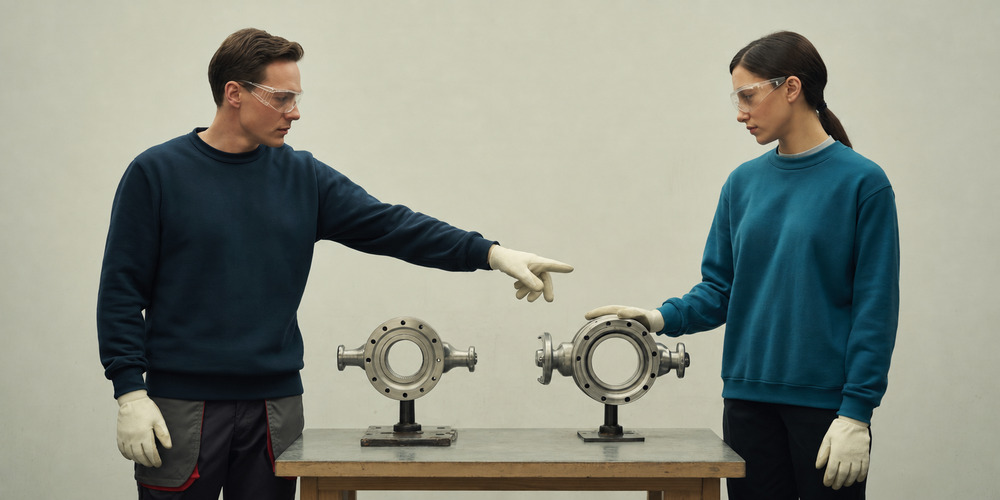
Peyton’s 4-step approach replaces the single demonstration with a structured sequence. Step one, demonstrate: perform the whole skill at normal speed, without commentary, so the student sees the target they are aiming for. Step two, deconstruct: repeat the skill slowly, naming each step and the safety or quality checkpoint at each one — “set the amperage, check the angle, strike the arc.” Step three, comprehend: have the student narrate the steps back before they touch the equipment. This is the step “see one, do one” skips, and it is the one that forces the novice to build a mental model instead of a blurry impression. Step four, perform: the student does the skill while you coach, giving immediate, criterion-referenced feedback on the specific step — not a grade at the end.
The evidence for this sequence is not thin. A 2020 systematic review and meta-analysis by Giacomino and colleagues, published in PeerJ, pooled studies of Peyton’s approach in health professions education and found it produced a standardized mean difference of 0.45 at post-acquisition and 0.7 at retention in favor of the approach over standard instruction. The same review flagged a key moderator: the approach works better with smaller student-to-teacher ratios. A 2011 randomized controlled trial by Krautter and colleagues, published in Teaching and Learning in Medicine, found that Peyton’s approach led to significantly faster first independent performance — 168 seconds versus 242 seconds — even though checklist accuracy was similar. In other words, the structured sequence did not make students more accurate on a binary checklist; it made them competent faster and more professional in their communication.
The coaching insight: bias time toward practice, not re-demonstration
The most actionable finding for a CTE instructor is not about the four steps at all. It is about what happens after them. A 2025 randomized controlled trial by Darici and colleagues, published in Medical Education, compared extended coaching — supervised hands-on practice — against extended modeling, where the instructor keeps demonstrating. Coaching outperformed modeling by 12% on interpreting dynamic imagery, and the coaching group finished exams 7% faster. The takeaway is blunt: once you have demonstrated and deconstructed, your remaining time is better spent watching students practice and correcting them in the moment than re-demonstrating the skill a third time.
There is a direct vocational data point too. A 2026 quasi-experiment by Sudira and colleagues, published in Jurnal Pendidikan Vokasi, studied 80 undergraduate vocational students and found that rewatchable, SOP-anchored short videos — two to six minutes, segmented by step — improved delayed practical performance and reduced procedural errors compared with conventional instruction. That is the retention add-on: pair the four-step teach with a short rewatchable video of the standard operating procedure, and students can re-anchor themselves to the named steps between practice sessions.
What this means in a CTE lab, shop, or clinical site
The honest caveat first: most of this evidence comes from health professions education, not secondary CTE. The populations in the meta-analysis and the two RCTs are medical and health-professions learners, and the retention effect size in Giacomino’s review crosses zero (0.7 SMD, 95% CI -0.09 to 1.49), which means the retention benefit is suggestive but not statistically settled. Only the Sudira study is direct vocational evidence, and it is postsecondary and quasi-experimental, not randomized. Instructors should read this as a strong directional signal with a clear mechanism — structure, comprehension checks, and supervised practice beat sink-or-swim — not as a settled proof that every CTE skill will improve by a fixed margin.
That said, the mechanism transfers cleanly. Welding, HVAC, healthcare, IT, automotive, manufacturing, culinary, and construction all share the same underlying structure: procedural skills with observable steps, safety checkpoints, and a quality standard. A Philadelphia CTE instructor teaching phlebotomy in a health sciences academy, or a welding instructor in a career and technical high school, is teaching the same kind of procedural skill the medical-education research studied. The four-step sequence does not require new equipment, new software, or administrative approval. It requires only a change in how the instructor spends the first ten minutes with a novice.
The implementation is concrete enough to do this week. Pick one lab skill you are introducing in the next few days. Demonstrate it once at full speed, silently. Deconstruct it slowly, naming each step and its checkpoint. Have the student narrate the steps back before touching the equipment. Then coach them through their first attempt, giving feedback on the specific step, not a grade. After that, resist the urge to re-demonstrate — hand the practice time to the student and correct in the moment. If you can, record a two-to-six-minute SOP video segmented by step and make it rewatchable, so students can re-anchor between sessions.
The good, the bad, what’s best?
The good: The four-step sequence costs nothing, fits every procedural skill cluster, and is backed by a meta-analysis and two randomized trials pointing the same direction. The bad: The evidence is mostly from health professions education, the retention benefit is not statistically settled, and the approach demands more instructor attention per student — which is exactly why the small-group moderator matters. What’s best: Convert one skill this week, not your whole curriculum. The goal is to break the “see one, do one” default on the first skills of the year, when the habit is being set, and to bias your remaining time toward coaching over re-demonstration.
✅ Recommended forward action: This week, convert one lab, shop, or clinical skill to the four-step teach — demonstrate, deconstruct, comprehend, perform — and shift your post-demonstration time toward supervised practice. Record a short rewatchable SOP video for the same skill to support retention between sessions.
Sources:
- Giacomino et al. (2020), “The effectiveness of the Peyton’s 4-step teaching approach on skill acquisition of procedures in health professions education,” PeerJ: https://consensus.app/papers/details/89a1dc24b24a568bb1f324e00904f843/
- Krautter et al. (2011), “Effects of Peyton’s Four-Step Approach on Objective Performance Measures in Technical Skills Training,” Teaching and Learning in Medicine: https://consensus.app/papers/details/97e4b819614b5f299c0fabd41fa0199a/
- Darici et al. (2025), “Should medical teachers spend more time modelling or coaching students?” Medical Education: https://consensus.app/papers/details/8266e64d0a0f50189f0ece9777753cbe/
- Sudira et al. (2026), “Mobile microlearning with repeated short video access: Effects on vocational skill retention,” Jurnal Pendidikan Vokasi: https://consensus.app/papers/details/92b545cf6474537abe9033caaefb636d/
- Burgess et al. (2020), “Tips for teaching procedural skills,” BMC Medical Education: https://consensus.app/papers/details/885f1f2cf6cf59ccae496390304dd02c/