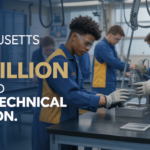

When engineering students at Philadelphia’s Swenson Arts and Technology High School open their PLTW lab kits each fall, they are not completing a textbook exercise. They are building the same types of circuits, running the same stress simulations, and testing the same materials that technicians at Lockheed Martin and Boeing use every day on the production floor. That alignment between what happens in a high school CTE lab and what employers demand on day one is exactly what Project Lead The Way has spent two decades trying to systematize — and it is increasingly showing up in Philadelphia’s own career and technical education landscape.
The Core Claim: Curriculum That Bridges the Gap
PLTW’s platform is built around a single proposition: hands-on, project-based STEM curriculum can serve double duty as career pathway preparation. Their programs span PreK through 12, but the high school tracks — Engineering, Computer Science, and Biomedical Science — are where the CTE overlap becomes most visible. Students don’t just study theory. They earn industry-aligned competencies that map directly to certifications, apprenticeship prerequisites, and entry-level technical roles.
This is not a new idea in CTE. What PLTW brings is scale and standardization. Their curriculum is deployed in over 12,000 schools across all 50 states, backed by partnerships with employers like Chevron, Toyota, John Deere, Amazon Web Services, and Lockheed Martin. Those partnerships are not decorative logos on a website — they shape the competencies embedded in each course module. When AWS co-develops a cloud computing unit, the resulting student projects mirror actual AWS certification objectives. When Lockheed Martin sponsors engineering pathways, the capstone projects reflect the same systems engineering principles their workforce uses.
What This Looks Like in a CTE Lab
In a traditional academic setting, a PLTW engineering course might be framed as “exposure to STEM careers.” In a CTE program, the same course becomes a competency-building block in a career pathway that leads somewhere specific — an industry credential, a registered apprenticeship, or direct entry into a technical associate degree program.
Consider the difference in outcomes:
- In a general education context, a student completes a PLTW unit on robotics and receives a grade. The transcript reads “Engineering elective.”
- In a CTE context, that same student uses the PLTW robotics unit to build toward an OSHA-10 safety certification, a NCCER credential, or an articulation agreement with a community college manufacturing program. The transcript reads “Manufacturing pathway — competency unit 3 of 8.”
The curriculum is identical. The framing, the instructor’s industry expertise, and the credential-aligned assessment make it CTE.
Why Philadelphia Should Pay Attention
Philadelphia has one of the most robust CTE ecosystems in the country. The School District of Philadelphia operates over 80 CTE programs across 30-plus high schools, serving more than 16,000 students in pathways ranging from health sciences to construction trades to information technology. Programs at schools like Swenson, Randolph Career Academy, and the Philadelphia High School for Girls already use project-based learning as a core instructional strategy.
But the gap between “project-based learning” and “industry-credential-aligned curriculum” is where platforms like PLTW become relevant. Several Philadelphia-area schools already hold PLTW certification — and the alignment between PLTW’s engineering and biomedical tracks and the district’s existing CTE pathways in advanced manufacturing and health sciences creates opportunities for stackable credential systems that don’t currently exist at scale.
Here is what that could look like in practice:
- A student in Swenson’s electrical construction CTE program could use PLTW engineering modules to earn competencies that stack toward both an IBEW Local 98 apprenticeship entrance exam and a post-secondary engineering technology associate degree at Philadelphia Community College.
- A health sciences CTE completer at Randolph could use PLTW biomedical coursework to build toward a certified nursing assistant credential while simultaneously preparing for a pre-med track at Temple University.
- An IT pathway student could combine PLTW computer science coursework with CompTIA A+ certification prep, creating a dual-credentialed graduate who enters the Philadelphia tech workforce with both academic depth and verified technical skills.
The Industry Partnership Model — and Its Limits
PLTW’s employer partnership model is worth examining because it mirrors what high-quality CTE programs have always done: bring industry into the instructional design process. Chevron helps shape energy engineering modules. Toyota sponsors advanced manufacturing content. Verizon supports cybersecurity pathways. The result is curriculum that reflects current workforce demands rather than a textbook publisher’s two-year-old edition.
But there are limits to the vendor-led model that CTE programs should approach with clear eyes:
- Vendor lock-in risk. Schools that invest heavily in a single platform’s curriculum, training, and equipment may find it difficult to pivot when industry standards shift or when a different credential pathway becomes more relevant to local employer needs.
- Localization gap. PLTW’s curriculum is national in scope. It does not automatically include Philadelphia-specific employers, Pennsylvania Department of Education CTE standards, or regional workforce board priorities. The onus is on the local CTE instructor to bridge that gap — and that requires dedicated professional development time that many districts don’t adequately fund.
- Cost structure. PLTW implementation requires annual program fees, equipment purchases, and instructor certification training. For a district like Philadelphia, where CTE programs already compete for capital funding, adding a platform license on top of existing lab equipment costs requires careful Perkins V and local budget planning.
The Credential Connection
What makes PLTW relevant to CTE — rather than just another STEM enrichment program — is the credential pathway alignment. PLTW’s high school engineering pathway maps to post-secondary engineering technology programs. The biomedical track connects to clinical laboratory science and pre-health degree programs. The computer science pathway aligns with AWS, Cisco, and CompTIA certification objectives.
In Pennsylvania, this matters because PDE has been expanding its recognized industry credential list for CTE programs. Credentials earned through PLTW-aligned coursework can count toward the state’s CTE program quality indicators and, in some cases, toward the Pennsylvania Skills Certificate. For a Philadelphia CTE program director trying to demonstrate program effectiveness under Perkins V accountability requirements, having a curriculum platform that is pre-aligned to credential objectives is a significant administrative advantage.
The Bottom Line for CTE Programs
PLTW is not a replacement for a well-designed CTE program. It is a curriculum infrastructure that can accelerate credential alignment and bring employer-vetted content into the lab — but only if the local program builds the bridge between the platform and the regional workforce ecosystem.
For Philadelphia, the opportunity is specific: use PLTW’s standardized curriculum modules as building blocks within the district’s existing CTE pathway architecture, connect them to local employer partnerships through the Philadelphia Workforce Development Board and PA CareerLink, and ensure that every PLTW unit in a CTE lab terminates at a credential, an apprenticeship milestone, or an articulation agreement — not just a grade.
The students running circuit simulations at Swenson are not “doing STEM activities.” They are building career-ready competencies that Philadelphia employers have said they need. The job of CTE leadership is to make sure those competencies count — on paper, in a credential system, and on a paycheck.
—
Originally reported by PLTW.org | PhillyCTE